
For three weeks in November, St. Anne’s joins secondary schools across Kenya for one of the most demanding stretches of the academic year: national eams for form four students. For three weeks, students sit two exams per day, each lasting 2.5 to 3 hours. Students who studied computers or home science began even earlier. The entire schedule of exams is available here (dates are day/month/year, so 03/11/25 is November 3). We are now in the last week of testing. Then comes the long, nerve-wracking wait for results. These scores carry enormous weight, determining whether and where a student can go to university, as well as the fields they’ll be allowed to pursue.
During exams, security is extremely strict. No visitors can enter the campus at all, and most teachers are not permitted either. Tests are distributed from a secure location in the morning and afternoon, and must be returned immediately after the exam is completed. It’s a system designed to protect the integrity of tests that shape the futures of hundreds of thousands of students.

Zoom makes very long distance review possible!
Reviewing From Half a World Away
Questions are open-ended, and worth varying numbers of points. Two of the exams are over mathematics. Principal Sarah Mwaura shared math questions from previous years with me, and we were able to hold three revision sessions (we would call it review here in the US) over Zoom, back in October. One memorable question from our probability revision session looked like this:
a) Two integers x and y are selected at random from the integers 1 to 8. If the same integer may be selected twice,
(i) Find the probability that x – y = 2. (2 marks)
(ii) Find the probability that x – y is more. (2 marks)
(iii) Find the probability that x > y. (2 marks)
(b) A die is biased so that when tossed, the probability of a number r showing up, is given by P(r) = Kr where K is a constant and r = 1, 2, 3, 4, 5 and 6 (the number on the faces of the die)
(i) Find the value of K. (2 marks)
(ii) If the die is tossed twice, calculate the probability that the total score is 11. (2 marks)
And from the motion problems we covered:
Two towns, A and B, are 80 km apart.
Juma started cycling from town A to town B at 10.00 am at an average speed of 40 km/h.
Mutuku started his journey from town B to town A at 10.30 am and travelled by car at an average speed of 60 km/h.
(a) Calculate:
(i) The distance from town A when Juma and Mutuku met. (5 marks)
(ii) The distance from town A when Juma and Mutuku met. (2 marks)
(b) Kamau started cycling from town A to town B at 10.21 am. He met Mutuku at the same time as Juma did. Determine Kamau’s average speed. (3 marks)
For readers who want to test their own skills, here are more probability revision questions, and some motion questions.
What English Exams Demand—And Why They Impress
Valarie Chemutai, a St. Anne’s graduate who teaches English at another school in Kenya, provided some previous years’ released questions from the three English exams. Former FOSA board member and retired AP English teacher Linda Schukman reviewed them and offered this reflection.
“These exams cover many important aspects of English language and literature. The literary analysis sections hold students much more accountable than American state and national exams, which are often reduced to multiple choice. Total recall is always more exacting than multiple choice! Attention to the effects of diction is clearly important especially when English is a second language. Overall, these exams very carefully and completely assess a student’s command of English as well as analytical skills.”
Some Much-Needed Stress Relief
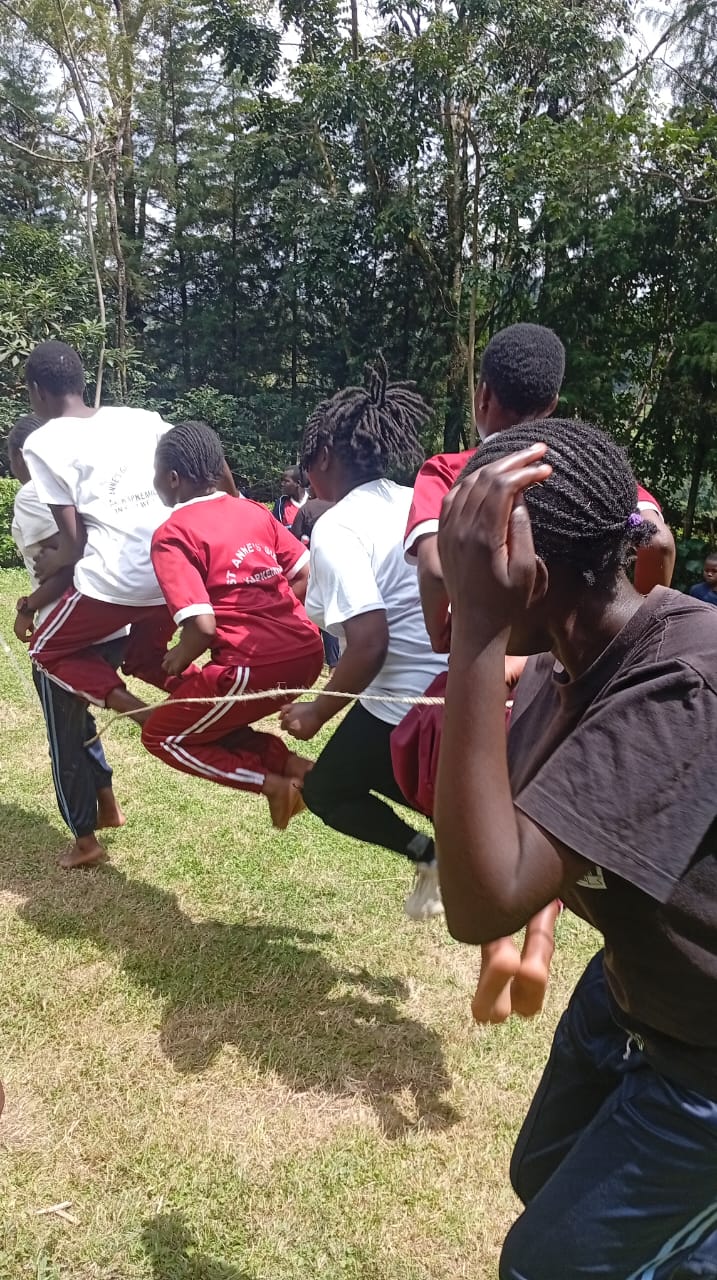
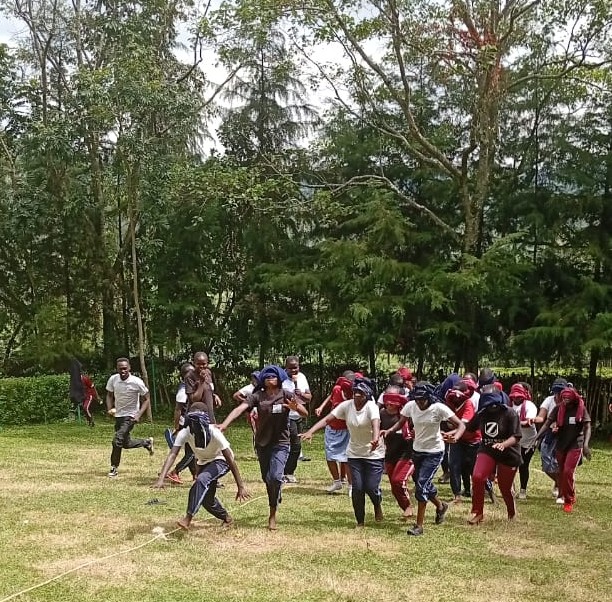
It’s no surprise that the exam period is grueling, rigorous, and stressful. This year, the school held a retreat for the girls as they prepared to begin the process.
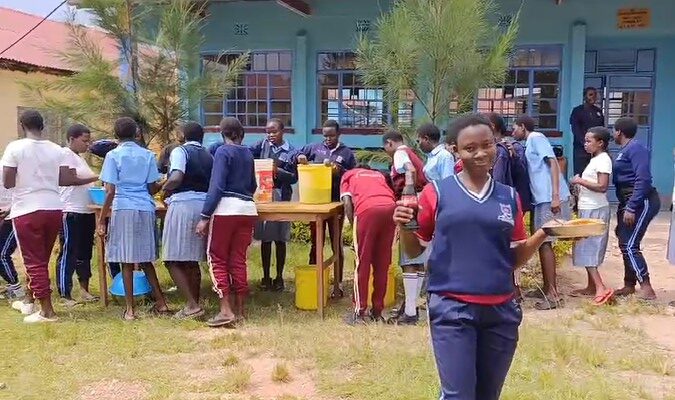
Thanks to a board member donation, the girls were able to enjoy a welcome treat during a break last week—small moments of joy matter during such an intense season.
Looking Ahead With Hope
St. Anne’s exam results have improved each year, and we’re optimistic that this class will continue that upward trend.
Their hard work, resilience, and determination are inspiring—not just during exams, but throughout their time at St. Anne’s.
—Ginger Riddle
